Customers rate us




Deliver to
Belgium
 English
£
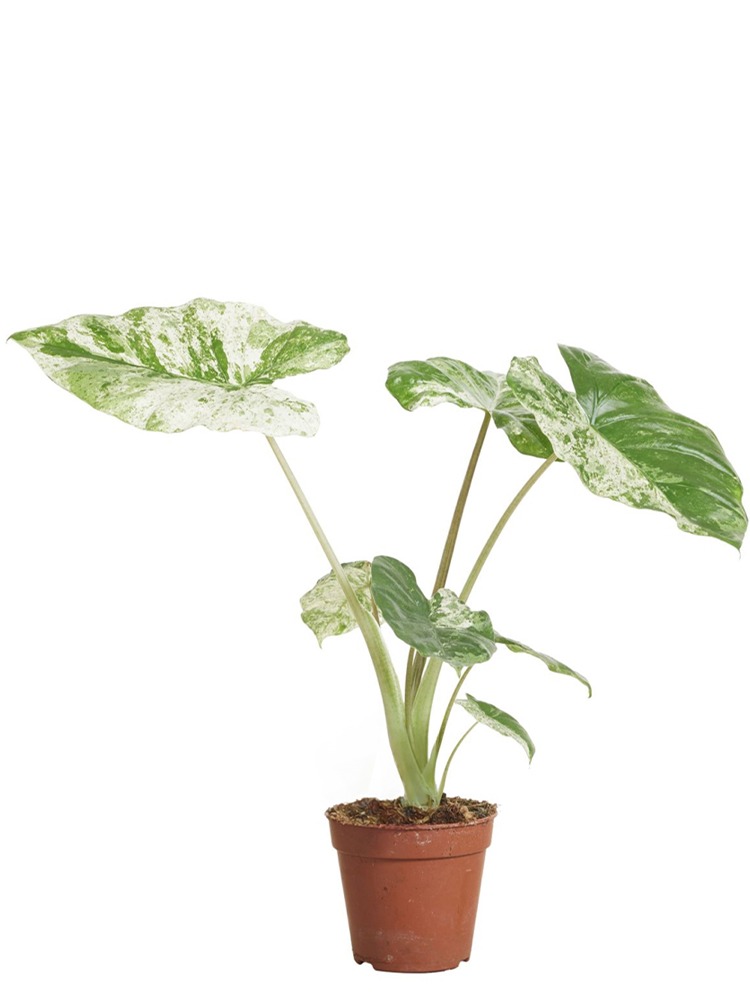
changeAlocasia, also known as elephant ear, belongs to the Araceae family, just like Dieffenbachia, Spathiphyllum and Zamioculcas. They may look very different, but their care and propagation have a lot in common.
Want to propagate your Alocasia? Then you'll need a young shoot. Without it, there's nothing to propagate. And if the shoot is smaller than 20 centimetres, it's best to wait a bit longer. But once it’s big enough, you're good to go.
Rinse your knife or scissors with hot water and a bit of soap. Then use alcohol or disinfectant to remove bacteria and fungi.
Carefully take the Alocasia out of its pot and loosen the shoot. This is easiest when the soil is slightly dry. Make sure the shoot is at least 20 centimetres tall. Remove as much soil as possible so you can check how many roots it already has.
Be careful when cutting. A healthy cutting should have its own roots. If the shoot doesn’t have roots yet, it's better to put it back. The chances of it surviving without roots are very low.
Place the cutting in fresh soil in a suitable pot. Add a little water and place it in a bright spot without direct sunlight. You can also root Alocasia in water (hydroponics), although not every variety responds well to this.
Repotting the mother plant too? Choose a pot that's about twenty per cent larger than the previous one.
Best time: spring or early summer
Light: bright, indirect light
Water: keep the soil lightly moist
Patience: results may take time, especially in winter
Hydroponics: works for some varieties, not all
Yes, absolutely. Without its own roots, a shoot usually won’t survive on its own. Not sure? Then it’s better to wait a little longer before propagating.
Explore our range of Alocasia in different sizes and colours.
These tips are based on our own experience with Alocasia in our greenhouse. We only share methods we’ve tested ourselves and that are suitable for beginners too.
Want to learn more about propagation? Take a look at our other plant-specific propagation guides.