

 Customers rate us




Deliver to
Europe
 English
£
changeSpring and summer are the busiest months for your indoor plants. They produce new leaves, grow faster and need more water and nutrients. Once the days get shorter and the temperature drops, your plant’s needs change. For most plants, autumn and winter are a resting period. Growth slows down, water use decreases and they need a different kind of care. But what exactly should you adjust during these months? In this blog you’ll find everything you need to know about caring for indoor plants in autumn and winter.
In autumn and winter there’s much less daylight. Plants that did fine further away from the window in summer often need more light now. Place them closer to a window, preferably one facing south or west. Watch out for draughts and cold air, especially with single glazing. Always keep a little distance so leaves don’t touch the glass directly.
Not much natural light at home? Go for shade-tolerant plants such as the Zamioculcas, Sansevieria or Aspidistra. You can also use a grow light to give your plants some extra support. You’ll find more on this in our blog about grow lights for indoor plants.
Dust on the leaves can block light, which is especially a problem in autumn and winter when there is already less daylight. By regularly cleaning the leaves with a damp cloth or a soft feather duster, you make sure your indoor plants can use all the available light.
In summer water evaporates faster due to the warmth, so plants get thirsty. In autumn and winter plants use less water because of cooler temperatures and shorter days.
Always check the soil before watering. Push a finger a few centimetres into the compost. If it still feels moist, wait a bit. If it’s dry, you can water. It’s better to give small amounts to prevent root rot. A measuring jug helps you know exactly how much water your plant gets.
A common mistake is to keep giving plant nutrition. During autumn and winter plants hardly take up any nutrients. If you continue, minerals can build up in the soil and damage the roots. Stop feeding at the end of September. From March or April, when growth starts again, you can start feeding your plants once more.
Just like plant nutrition, repotting isn’t recommended during the colder months. Repotting almost always causes some minor damage to the roots, and the plant needs a lot of energy to recover from that. Energy it could use better during autumn and winter. So it’s best to wait until spring!

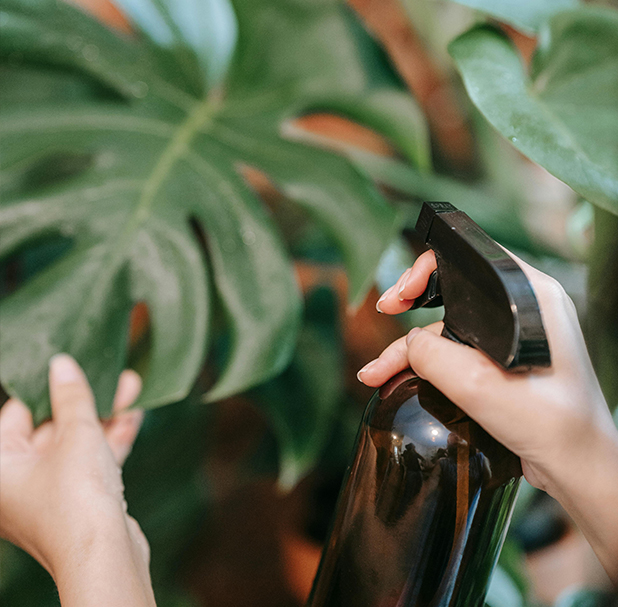
Once the heating comes on, humidity levels indoors drop. Tropical plants such as the Calathea, Monstera and Peace Lily thrive in humid air. In dry air they develop brown leaf edges or suffer from spider mites.
You can raise humidity by placing bowls of water on radiators or using a humidifier. Grouping plants together also helps, as long as there are no pests. A plant mister works for a short while but needs to be repeated often to be effective.
Dust on leaves blocks light absorption. Wipe them regularly with a damp cloth.
Dry air encourages pests like spider mites and mealybugs. Check the undersides of leaves often and act quickly if you spot any.
Because winter light enters at an angle, plants grow towards the window more quickly. By turning the pot a quarter every so often, your plant keeps a balanced shape.
Plants like the Alocasia, Philodendron and Anthurium are sensitive to dry air and cold. Keep a closer eye on them during winter.
Peace Lilies and orchids usually bloom less in winter. That’s normal as they save their energy for spring. Remove spent flowers so the plant doesn’t waste energy.
These need very little water in winter. Place them in a bright spot and only water occasionally with small amounts.
The shift to autumn and winter means a resting period for your indoor plants. For you it’s mainly about a few simple changes: give less water, stop feeding, keep an eye on light and improve humidity.
With these basics, caring for indoor plants in autumn and winter stays easy and effective. Your plants will remain healthy and strong, ready to burst into growth again in spring.


